
Tuesday, June 10, 2014

Fizz Boom Reads: Picture Books

Though this year's CSLP summer reading theme, Fizz Boom Read, lends itself well to nonfiction reading, it's inevitable that kids will also want to read a few good stories. Over the next four weeks, I'll be sharing my lists of suggested fiction titles in each of four categories: picture books, easy readers, chapter books, and middle grade novels. First up, picture books!

Oh No! (Or How My Science Project Destroyed the World)
by Mac Barnett, illustrated by Dan Santat
A young girl builds a robot for her science project, then watches as it begins to destroy her city. Also check out the sequel, Oh No, Not Again!

11 Experiments That Failed
by Jenny Offill, illustrated by Nancy Carpenter
A mischievous little girl makes a series of hypotheses, then makes big messes as she tries to prove them.

Rosie Sprout's Time to Shine
by Alison Wortche, illustrated by Patrice Barton
When the self-proclaimed best student in Rosie's class falls ill during the class's plant-growing project, Rosie becomes a star by raising both her plant and the other girl's.

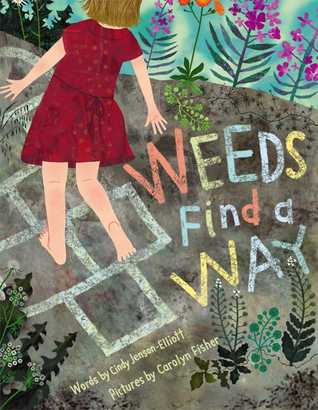
Weeds Find a Way

by Cindy Jenson-Elliott, illustrated by Carolyn Fisher
This poetic text describes weeds and how they grow, despite our efforts to thwart them.
   
How to Bicycle to the Moon to Plant Sunflowers: A Simple but Brilliant Plan in 24 Easy Steps
by Mordicai Gerstein
This imaginative picture book provides all the steps necessary to ride one's bike to the moon and plant flowers on its surface.


Nest
by Jorey Hurley
This almost-wordless picture book takes the reader on a visual journey through the life of a baby bird.

Argus
by Michelle Knudsen, illustrated by Andrea Wesson
Everyone in Mrs. Henshaw's class  receives an egg to hatch. Most contain chicks, but Sally's turns out to be something much more interesting!

Henry's Heart  
by Charise Mericle Harper
This book takes a look inside Henry's body, watching how his heart responds to various stimuli in his day-to-day life.

Water Can Be...
 
by Laura Purdie Salas, illustrated by Violeta Dabija
Poet Laura Purdie Salas shares the many uses and functions of water.

Water in the Park
by Emily Jenkins, illustrated by Stephanie Graegin
In 24 hours, water plays different roles in the lives of people who visit the park.

Wednesday, June 4, 2014

LibraryAdventure.com Interview: Meet Jennifer Wharton, Youth Services Librarian

The second post in The Library Adventure's new series of interviews with library professionals was published this morning. Check out my exchange with Jennifer Wharton here.

Tuesday, June 3, 2014

Story Time Music: Saying Goodbye

 
Over the past few weeks, I have been blogging about my experiences with story time music. I have discussed recorded music, a cappella singing, and playing live music, and I have also shared my thoughts on selecting hello songs, extension activities, and movement-based songs. In today's concluding post to the series, I focus on using music to end a story time session.

Just as a hello song signals that story time is starting, the goodbye song lets everyone know it’s time to go home, or at least that story time is finished, and it's time to move on to whatever comes next. To be truly effective, I think a goodbye song needs to directly state that it’s time to leave, and that we’re saying goodbye. If there is a craft or other activity to follow, the song would ideally reference the transition to that activity as well.

Though adults can watch the clock and figure out that story time is about to end based on the fact that 30 minutes is up, kids don't have that advantage, so I like to help them wind down from story time with a predictable closing routine. At most of my morning story times, this routine consists of singing If You're Happy and You Know It and then our goodbye song. At class visits, kids know we're just about done when we sing Laurie Berkner's These Are My Glasses. At pajama story time, we wind things down a bit more calmly by singing goodnight to animal puppets with Goodnight (also by Laurie Berkner). Kids are creatures of habit and routine, and if the end of story time is the same every single time, they begin to understand intuitively that it's time for the session to end when they hear certain songs.

Three great goodbye songs and rhymes are listed below:
  • We Wave Goodbye Like This is my preferred goodbye song. The motions are very simple - waving and clapping - and the song signals the end of story time and also applauds the kids for participating. The song is also very short, so if people get up and start leaving in the middle of it, they're not really interrupting anything the kids will miss out on.
  • The Open, Shut Them Goodbye Song is my simplified goodbye song for babies and toddlers. The youngest kids typically can't open and shut their hands very well, but they can definitely raise their hands up high and wave goodbye. I always sing this song twice so the kids can learn it, and it's definitely a favorite of the parents as well. 
  • My Hands Say Thank You is the first goodbye rhyme I ever learned, and I still tend to use it for Thanksgiving themed story times. It's a nice alternative for librarians who don't like to sing, and it works best with twos and threes.
Thank you so much for reading this series of posts about using music at story time. If you missed any of the previous installments, all are linked below:

Friday, May 30, 2014

#ArmchairBEA Day 5: Middle Grade/YA


Armchair BEA ends today, and the final topic is Middle Grade/Young Adult. As I mentioned in my introduction on Monday, I read a lot of middle grade. I also read some contemporary YA. Today, I'm sharing some of the criteria I use when I review books at this level. Below are 8 tips for evaluating middle grade and young adult books.
  • Don't judge a book by its cover.
    This is a cliche, of course, but it's a good place to start. Book covers can and do change from edition to edition. They reflect one illustrator's interpretation of an author's work, and sometimes the current design trends in the publishing field. Though books with similar content sometimes have similar covers, there are also many situations where the cover of a book does not live up to the wonderful story it advertises. At least read a little bit about a book before you completely dismiss it. Sometimes stories with hideous covers turn out to be real gems - and if  they're lucky, they get better covers when the paperback editions come out! 
  • Look for plot holes.
    Plot is a key component in books for older readers, and especially in middle grade stories.  As you read, pay attention to the way events unfold. Is the story plotted in a logical way? Do things happen in a sequence that makes sense and slowly builds up to a satisfying conclusion? Are things tied up plausibly? Are there loose ends? Truly well-plotted stories often make you forget that you're even reading a story in the first place because everything flows so smoothly and naturally.  
  • Consider genre conventions.
    Some genres come with their own expectations. Mystery novels generally include a series of red herrings, followed by the eventual unveiling of  the truth. Fantasy novels require world-building and an establishment of rules within that world before they can proceed to tell a believable story. Historical fiction is bound by history, and anachronisms must be avoided. When you read, consider what readers expect from the story's genre and decide whether the book meets or fails to meet those expectations.   
  • Scrutinize the setting.
    Whether it evokes a certain mood, creates certain weather conditions, or provides a character access to certain people, places, or objects, the setting of a story often enhances its overall success. Watch for the specific details an author uses to transport readers into his or her world. Do these details make it easy to imagine the setting? Has the author provided enough information about the setting to contribute something significant to the story? Conversely, does the setting overshadow other more important aspects of the book? The importance of setting varies from story to story, but it's a point worth considering in your reviews.
  • Look beyond likability. 
    Too often I read book reviews where the reviewer's opinion is completely wrapped up in whether he or she liked the main character. The likability of a story's main character is actually not an indicator of the quality of a book. There are books with intentionally deplorable main characters. There are books with unreliable narrators, who may or may not be likable depending on the lies they tell. Some narrators (e.g. Holden Caulfield) annoy certain readers and elicit hero worship from others. It should not be a question of whether you would like to hang out with a particular character, but whether he or she is interesting to read about. Truly well-developed characters will all have some flaws, and, in moving through their stories, they will make mistakes. This journey toward overcoming these flaws and mistakes is what makes a good story. Instead of simply dismissing a book because the character doesn't appeal to your taste, think about a book's other qualities before giving it a bad review.  
  • Tune into your inner child/teen.
    Some children's books - particularly the award winners and classics  - easily appeal to adults. Others (Junie B. Jones, for example) might annoy adults and appeal much more to kids. Since kids are the intended audience for middle grade books, and teens the intended audience for young adult, it's important to look at things from those points of view. Maybe you don't love a book now, but how would you have felt about it at sixteen? Maybe your adult sensibilities make a particular plot point annoying to you now, but thinking back, it might seem like just the kind of thing you would have done yourself as a kid. When in doubt, talk with the kids in your life about how they see the books they read. Understanding where they're coming from will help you better evaluate the books published for them.  
  • Call out cliches and stereotypes. Keep an eye out for tired and overused phrases, images, and stereotypes in books. Don't hesitate to point out instances of insensitivity to particular religions, races, or backgrounds, and be mindful of trite descriptions and contrived endings. Relying on cliches is a sign of lazy writing; the best children's books avoid cliches and look at familiar things in new ways.
  • Separate your personal and professional opinions. 
    Reviewers, like librarians, should try to be as objective as possible when evaluating books. If we are doing our best to put the right book in the hands of the right reader, then our personal feelings are far less important than our overall objective opinion of a book's quality. Some parents don't allow their children to read books containing violence, or sexual content. This does not mean that a book containing those themes is inherently poorly written. It just means that book is not for that particular family. It is possible to find the content of a book objectionable, boring, or otherwise dissatisfying and still recognize that the book represents quality literature. Whatever my personal reaction to a work, my professional instinct is always to find the people who will appreciate it and recommend it to them.
Related Posts Plugin for WordPress, Blogger...