
Monday, December 9, 2013

Ten Picture Books That Are Secretly Easy Readers


It is usually pretty easy to identify an easy reader. Most of them are paperbacks, in a compact size, with a reading level printed on the spine and/or front cover. Many libraries shelve them separately as well, in an area apart from picture books and novels. Beginning readers can easily find their section and browse for books. But this does not mean that the only suitable books for beginning readers are the ones labeled as such. In fact, there are lots of great books that I have always shelved in the picture book section that are actually also perfect for kids who are learning how to read. Here are ten examples, listed in order of difficulty according to the Guided Reading system.

by Chris Raschka
Guided Reading Level: C
In very few words, two boys from obviously different backgrounds form a friendship. This would be a good one to use in a beginning reader story time setting, because the words on each page are large enough for everyone in a group to see them at once.

by Eric Carle
Guided Reading Level: C
 This has recently been published as an easy reader, but whenever it's checked out, the picture book version does just as well. The only problem is that kids might have it memorized so it might not be a good one to measure how much they are actually able to read.
by Antoinette Portis
Guided Reading Level: F
This book encourages kids to think outside the box - literally - by showing them how to use a cardboard box in a number of creative ways. There is very little text, and what is on the page is pretty repetitive, but kids I've read it with have talked about it for weeks afterward.  There are also a number of related printables on the publisher's website to extend the discussion after the initial reading is over.


by Janet Morgan Stoeke
Guided Reading Level: G
Midge, Pip, and Dot idolize Rooster Sam because they believe he can fly. They try to fly, too, but no matter what, they just can't seem to get the hang of it. The big, bold font, brightly colored illustrations, and great sense of humor make this a natural choice for beginning readers, especially those who like a good laugh as a payoff for their hard work.
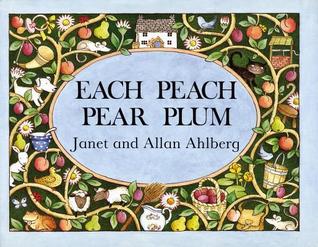
by Janet and Allan Ahlberg
Guided Reading Level: G
Various nursery rhyme characters hide on the pages of this book. The reader has a chance to play I Spy  while decoding the simple rhyming text. This book is probably best for kids who already know some nursery rhymes so they might recognize their names in print even if they're tricky to sound out.


by Jules Feiffer
Guided Reading Level: H
Animal names and sounds make up the majority of  the text in this book, and there is lots of repetition, making it just as ideal for new readers as for preschoolers. Kids will love laughing along with the silliness of the story and they might even want to perform it for others.


by Audrey and Don Wood
Guided Reading Level: I
I have used this book with beginning readers as a flannel board, and I've found that kids in first and second grade are the ones who can read every word. It's a great one for introducing adjectives and similes all at once, and the kids I shared it with loved guessing which animal was coming up next.
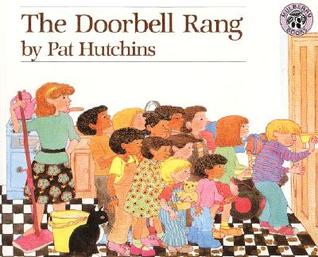
by Pat Hutchins
Guided Reading Level: J
This is another repetitive story, and it combines literacy with simple math skills. Though I have used it successfully with preschoolers, early elementary school kids are the most likely to understand the math concepts and to be able to calculate the number of cookies each child should get each time someone new joins the party. This is another one that would work well in a beginning reader story time setting, especially if the kids were able to come in and out of  the room and act out the story.

by Ruth Krauss and Maurice Sendak
Guided Reading Level Not Available

This strange little book is one I like to quote frequently. It's a great lesson in rhyming words, simple verbs, and prepositions, and the illustrations are reminiscent of Sendak's work in Where the Wild Things Are. It doesn't have much of a plot, but new readers will find they can read or sound out most of the words - even the ones in speech bubbles. Though I could not find a reading level for this book, I think it is probably a kindergarten or first grade book.
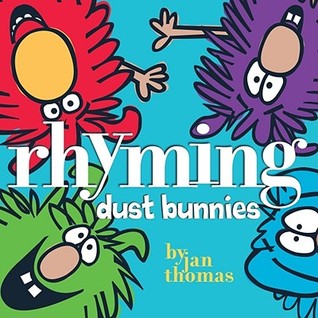
by Jan Thomas
Guided Reading Level: N
This fun book helps kids understand the concept of rhyme and plays into their silly sense of humor at the same time. Most Jan Thomas picture books are great for beginning readers; many of the jokes might even be lost on a younger audience. (Based on the Guided Reading level, this would work best as a reader for a child who is just about ready to graduate to chapter books, making it the most challenging book on the list.)

Monday, December 2, 2013

At the Children's Desk: A Day of Questions


In the weeks before I left my job, my duties away from the reference desk began to dwindle, and I started really focusing my attention on answering questions. There were several days in September and early October where I was on the desk more often than I was not, and on those days, I took notes, keeping track of every question I was asked, and by whom. Today's post focuses on the questions I handled on a typical Thursday (September 12, 2013) when I was working alone in the children's department. I mostly let the questions speak for themselves because they're more interesting - and funnier - that way, but I have included some notes in brackets where necessary.


9:30 a.m. - LIBRARY OPENS


9:30 a.m. - 10:30 a.m.


  • Parent: My wife told me to sign up for this thing at 11:00. Can I do that with you? 
  • Parent: My daughter is in third grade, and she has this geometry homework. [She showed me a worksheet where shapes needed to be sorted into Venn diagrams.] Do you have books on that? 
  • Senior Citizen Woman: Do you have Wild by Cheryl Strayed? How about anything by Robin Cook? What about Whiskey Beach? Will you notify me when my hold comes in? 
  • Pre-K Teacher, via phone: Can I set up a time to bring my pre-K class over for story time? 
  • Woman: What is today's date? 
  • Senior Citizen Woman: I didn't find Whiskey Beach. Are you sure it's here?

10:30 a.m. - 11:30 a.m.

  • Parent: Can you find me some Thomas books that are level one?
  • Parent/Nanny: Where do you keep your level 4 easy readers?
  • Parent: Do you have Fall books? Do you have I Spy books?


11:30 a.m. - 12:30 p.m. LUNCH


12:30 p.m. - 1:30 p.m.

  • Homeschooled Child: Do you have the first two books in the Warriors series?  Do you know what the second Redwall book is called?

1:30 p.m. -  2:30 p.m.

  • Homeschooled Child: Do you know where I could find the movie Eragon?
  • Teacher: Do you have the Carl books? [For clarification, I asked, "Eric Carle?"] No, you know, the rottweiler?

2:30 p.m. - 3:30 p.m.

  • Child: The computer [AWE Early Literacy Station] isn't playing any sound!
  • Adult: I was looking for the third book in the Song of the Lioness series. Is it here?
  • Adult: I'm having trouble placing a hold on Born Standing Up. Can you do it for me?
  • Parent: If I borrow a Harry Potter DVD, and it's late, is that treated as a children's item or an adult item for my late fee?
  • Child: Can you go on the computer without a library card?
  • Middle Schooler, tattling: He's trying to get her to sell him cookies! 
  • Adult: Do you know where the medium conference room is?
  • Child: Can I borrow a headset?
  • Middler Schooler: The boy sitting next to me is pulling my chair back when I'm sitting in it.
  • Parent: Did my son pull his chair?
  • Adult: Where do I return books?
  • Adult: Where is the medium conference room?
  • Adult: Is the only printer you have the one that is out of order? Where can I fax?
  • Parent, with two kids: Do you have two pencils we can borrow?

3:30 p.m. - 4:30 p.m.


  • Child: Can I borrow a pencil?
  • Child: Do you have anymore notebooks like this one on your desk?
  • Child: Can I borrow a pencil?
  • Child: Can I have a bookmark?
  • Parent: Where are the Thomas the Tank Engine books?
  • Middle schooler: Safari is frozen and I can't log out of my computer.
  • Middler schooler, complaining about another middle schooler: He's taking pictures of me, and I want him to stop.
  • Staff Member: Do you know where the Star Wars DVDs are for kids?
  • Parent: You're not really monitoring what these kids do on the computers, are you?
  • Child: Do you have any books by John Green?
  • Middle Schooler, holding bottle of Dawn dish soap: I found this on the floor.
  • Child: Do you have the movie Happily Never After II?
  • Middle Schooler: Can I have this comic book?
  • Middle Schooler: There was dish soap on the floor over there and now it's gone!
  • Child: How do I log out of this computer?
  • Middle Schooler (who was earlier taking pictures): Are we having a tornado?
  • Parent: I don't have my library card. Can I check out if I just give them my name?
  • Child: Where are the chapter books for kids?
  • Child: Do you have comic books at this library?
  • Child: Where are the books about fairies for kids?
  • Child, sibling of previous child: Where are the fairy books?
  • Child: Did you find a clarinet?

4:30 p.m. - 5:30 p.m.

  • Child: Do you have to check out this magazine?
  • Parent: Can we just set our stuff here while we use the bathroom?


5:30 p.m. - LIBRARY CLOSES


Monday, November 25, 2013

Reflections on Library Service to Babies

Most children’s librarians know that the first five years of life is a critical window for developing early literacy skills. We encourage parents to read with their babies. We offer lap times for babies and we continually seek out those wonderful board books and fingerplays that parents will take home and share again and again. We deliver early literacy messages at story time that define early literacy skills for caregivers and provide practical applications for them. Still, even with all the theory and background information in place, some of us can become intimidated by the thought of approaching an actual baby, or group of babies, especially if we are not parents ourselves.

I remember very well the sense of panic I felt the first time I was asked to do a baby story time. What would the parents think of me? How could I possibly perform story time for children who did not yet speak, some of whom could not even sit up on their own? For me, who had never really interacted with babies at all, the learning curve was very steep and the level of anxiety very high. Now, looking back over nearly three years of baby story times and interactions with the parents and nannies of little babies, I can recognize little hints and tidbits of advice that would have been very helpful back when I was a new librarian. I want to share a few of those today.
  • Learn each baby’s name.
    The quickest ice breaker when meeting a parent and baby for the first time, is to learn their names. Most parents like to talk about their kids, at least a little bit, and asking what the little one’s name is and how old he is shows your interest in the child. It also provides a welcoming atmosphere for a new mom or dad when you offer a smile and initiate introductions. If at all possible, it’s great to retain the baby’s name in your memory so you can greet the child by name the next time he comes to the library. This leads directly into my next point, which is...
  • Address babies as well as their grown-ups.
    Babies who ride in strollers or carriers all day can sometimes be easy to ignore, as though they are accessories or articles of clothing rather than people. Parents often even don’t realize that the librarian is there to serve the child as much as the mom or dad. But my quest is to make the library a welcoming place for even the youngest patrons, so I make sure to always speak to both the parent and the child. If I’ve met the child before and remember her name, I might say, “Oh, good morning, Susie! I notice you’re wearing your lion shirt. It’s so nice to see you at the library.” Then I’ll turn to Mom and greet her as well. When parents ask for books for their babies, I also try to include the baby in the discusson. “Oh, look at this book. You might like this one. Let’s see what Dad thinks of it.” I don’t have any expectation that a baby is going to participate in a conversation about books, but I do make sure the baby is included and has the chance to interact with me along with his parent.
  • Have a separate story time for babies.
    When I first started, the babies and toddlers at my library attended story time in one giant group. This seemed to be what the nannies preferred, and I wasn’t sure they would be thrilled with any changes. I quickly learned, though, that whatever the nannies liked, the babies sure didn’t like being jostled, bumped, drowned out, poked, and otherwise annoyed by their busy toddler friends. The really little ones also didn’t like being in a hot, crowded room where they couldn’t see, hear, or understand what was happening around them. Thus, I created a baby story time, and I was adamant about limiting attendance only to babies who did not yet walk. Parents felt more comfortable bringing their tiny ones to a more controlled story time, and I was able to focus my materials on the developmental needs of this age group. Babies sometimes still showed up to story times that were for older children, but the option for a story time of their own was always available. The quality of my baby story times improved greatly, and the story time became one of the most popular at my branch.
  • Have a baby-friendly space in your library.
    I had no idea how many parents would want a place for their babies to be able to crawl around in the library until they started asking me where they could find such an area. It turns out that many parents realize that the library is a baby-friendly place and they want to be able to hang out there outside of organized library activities. What I ended up doing at my branch was moving some of the picture book bins and replacing them with a square carpeted area for sitting and crawling. I also allowed people to use the carpeted story time room when story time was not in session, so their babies could have a safe child-proofed area to explore. Some might argue that the library is not really intended to be a baby meeting place, and that parents who expect a place for their babies to play in a public building are asking too much. I don’t think that is true. If we want to serve all children, from birth to adolescence, then we should be thoughtful enough to provide developmentally appropriate spaces for each age group.

I might have been afraid of babies when I became a children’s librarian, but over time, they became one of my favorite groups to work with. As a result of my early efforts, I was able to see several babies grow up into toddlers, and then into preschoolers, all while using the library and attending story time. By smiling, welcoming each child by name, and providing the spaces and services that best suit babies’ needs, any children’s librarian can help her library become the perfect hotspot for babies and their caregivers.

Friday, November 22, 2013

Flannel Friday: The Elephant and the Bad Baby by Elfrida Vipont & Raymond Briggs


As we continue to anxiously await the arrival of our new baby, expected just about any day, my husband and I have been relaxing and sharing books. The other day, he came home with a 1969 picture book called The Elephant and the Bad Baby, written by British children's author Elfrida Vipont and illustrated by Raymond Briggs of The Snowman fame. We read it aloud to each other just for the fun of it, but I soon realized the story would work really well as a flannel board or Powerpoint presentation. We came to have this book because it was being weeded from the collection at my husband's library, so I'm not sure how widely available it is, but I'd like to share my suggestions for using it with kids, and I'll try to provide enough of a script that  you can tell the story even if you can't find a copy of the original story.

The Story 


The story begins as follows:

Once upon a time there was an Elephant. 

One day the elephant went for a walk and met a Bad Baby. And the Elephant said to the Bad Baby, "Would you like a ride?"  And the Bad Baby said yes. 

So the elephant stretched out his trunk, picked up the Bad Baby, and put him on his back. And they went rumpeta, rumpeta, rumpeta, all down the road. 

At this point, the elephant and the baby meet the ice cream man. The elephant asks the baby if he wants an ice cream, and of course, the baby says yes.  So the elephant takes an ice cream for himself, and an ice cream for the baby, and they go "rumpeta, rumpeta, rumpeta, all down the road, with the ice cream man running after."

This is the basic formula for the entire story. The elephant and the baby come upon a butcher from whom they take meat pies, a baker from whom they take buns, a snackshop from which they take gingersnaps, a grocery store from which they each take a chocolate cookie, a candy store from which they take lollipops, and a fruit and vegetable man from whom they take apples. After each stop, the line of characters running after them grows longer, until finally, they go "rumpeta, rumpeta, rumpeta, all down the road, with the ice cream man, and the butcher, and the baker, and the snackshop man, and the grocer, and the lady from the candy store, and the fruit and vegetable man all running after."

At this point, the elephant turns on the baby, realizing that he has never once said please for any of the treats he has received. The Bad Baby falls off the elephant's back, and the entire group running behind them goes "BUMP into a heap." Finally, the Bad Baby does say please, and he asks to be taken home to his mother.  At the Bad Baby's house, his mother makes pancakes for everyone, then the angry mob chases the elephant away "rumpeta rumpeta rumpeta" while the baby falls fast asleep in bed.

Presentation


This presentation, which I created in Google Drive using free clipart is probably not finalized enough to use in a real story time. The structure of it is fine, but the clipart images I was able to find don't really match each other, and I'm not sure how well the kids would understand who is who based on some of the images. (The person in the candy store is meant to be female, for example, and a snackshop isn't really a fast food restaurant.) Still, I think this presentation will be helpful for anyone who wants to create flannel board pieces for the story, because there are so many characters and objects to keep track of. I also like experimenting with presentations like this because they let me get creative with moving the pieces and adding textual elements to the story without creating a lot of the distractions that come from constantly moving things on and off the flannel board.

Other Suggestions

My instinct is actually not to tell this story using the flannel board at first. I think the book works perfectly on its own, and if possible, sharing the original text and illustrations is probably the best way to introduce the story to a group of kids. Because the story is repetitive and cumulative, though, I think it lends itself very well to being retold on the flannel board once the kids have had a chance to assimilate the content. In classrooms, or in public libraries where theft is not a major problem, a set of flannel board pieces could easily become a center for kids to work on individually or in small groups. In a structured story time setting, having flannel board pieces on hand creates an opportunity to match the shopkeeper to the item taken from his shop, or to see how many of the shops the kids can remember in order. Just in general, I think it would also be interesting to hear from kids why they think the baby is bad, and whether the elephant is truly blameless. The "rumpeta, rumpeta, rumpeta" refrain also lends itself to interaction - it would be fun to have kids tap their knees in a galloping motion, or even stomp their own feet to imitate the elephant running. I really like this book, and I hope some of you will find that it is in your library's collections so you can use it and let me know what your groups think!

Flannel Friday

Bridget is our Flannel Friday host this week. For more Flannel Friday information and contributions, check out the official website, the Facebook group, and the Pinterest boards.
Related Posts Plugin for WordPress, Blogger...